


Australia continues to be one of the top study destinations for international students in 2026, thanks to its world-class universities, multicultural environment, and globally recognized degrees.
According to the Australian Department of Education, over 700,000 international students chose Australia for higher education in 2025 — a number expected to rise further this year.
However, studying abroad can be expensive, especially with tuition fees ranging between AUD 20,000 to AUD 45,000 per year.
That’s where Scholarships in Australia play a crucial role. These scholarships help students reduce their financial burden, making quality education more accessible and rewarding.
Genius Study Abroad, you’ll discover how to apply for scholarships in Australia 2026 – step by step. Whether you’re aiming for undergraduate, postgraduate, or research programs, this guide will help you navigate the process confidently and increase your chances of success.
Read More : Australia Student Visa 2026 Rejection Rate: Trends & Solutions
Why Choose Australia for Higher Education (and Scholarships)?

Australia stands out as a global education hub, offering top-ranked universities such as the University of Melbourne, Australian National University (ANU), and the University of Sydney — all consistently listed in the QS World University Rankings 2025 Top 50.
These institutions are known for their high academic standards, research opportunities, and globally recognized degrees, ensuring that graduates are prepared for successful international careers.
The country’s vibrant international student community, which exceeded 750,000 students in 2025, reflects its welcoming and inclusive culture.
To support this growing diversity, Australia has built a strong scholarship ecosystem funded by universities, government bodies, and private organizations — making Scholarships in Australia more accessible than ever.
Students also benefit from generous post-study work opportunities, with the Temporary Graduate Visa (subclass 485) allowing graduates to gain practical experience for up to 4 years after completing their studies.
There are various types of Scholarships in Australia, including merit-based, need-based, country-specific, and research-focused scholarships, ensuring every deserving student has a pathway to pursue their dream education.
At Genius Study Abroad, we guide aspiring students through every step — from choosing the right university to applying for the best Scholarships in Australia — making your study abroad journey to Australia in 2026 smooth, affordable, and rewarding.
Read More : Australia Student Visa 2026 Rejection Rate: Trends & Solutions
Understanding the Scholarship Landscape in Australia
Before applying, it’s essential to understand how Scholarships in Australia are structured and what types of funding opportunities are available. Australia offers a wide range of scholarships designed to support international students from all backgrounds — especially those showing academic excellence and leadership potential.
- Types of Scholarships:
- Government-Funded Scholarships: These include prestigious programs like the Australia Awards Scholarships and Destination Australia Scholarships, offering full or partial tuition fee coverage, living expenses, and travel allowances.
- University-Specific Scholarships: Leading universities such as Monash, UNSW, and the University of Queensland offer merit-based and research scholarships for high-achieving students.
- Private and NGO Scholarships: Organizations like the Go Global Education Fund and various industry associations also provide funding for specific courses or skill areas.
- Common Eligibility Criteria:
Most scholarships require strong academic performance (minimum 70–80%), English language proficiency (IELTS/TOEFL), and relevant documents such as a Statement of Purpose and academic transcripts. Some scholarships are also country-specific, giving preference to students from India and other developing nations. - Key Players & Funding Coverage:
Major sponsors like the Australian Government’s Department of Education, universities, and private foundations typically cover tuition fees, living stipends (AUD 20,000–30,000 per year), and travel or accommodation allowances, reducing the overall cost of studying abroad. - Why 2026 Is a Great Year for Scholarships:
For Indian students, 2026 brings new opportunities as Australia expands its international education budget and introduces more hybrid and research-linked scholarships. The global focus on skilled migration and innovation also means increased support for STEM and business programs.
At Genius Study Abroad, we stay updated with these evolving trends to help you identify the best Scholarships in Australia, prepare winning applications, and secure funding for your 2026 intake.
Read More : Australia PR & Work Opportunities for International Students 2026
How to Apply for Scholarships in Australia 2026: Step-by-Step
Applying for Scholarships in Australia requires careful planning, attention to detail, and consistency. Follow these structured steps to make your scholarship application strong, organized, and effective.
Start Early & Plan Ahead
Begin your preparation 12–18 months before your intended intake. This early start gives you time to research scholarships, gather documents, and meet eligibility criteria. Create a “scholarship calendar” to track deadlines, required documents, and important alerts. Students who plan early are statistically 40% more likely to secure funding, according to a 2025 QS survey.
Shortlist Your Scholarships
Identify scholarships that best match your academic level (UG, PG, PhD), field of study, and target universities. Use filters such as eligibility, coverage, deadlines, and required documents. Maintain a simple spreadsheet listing key details for easy comparison — this ensures you never miss an opportunity for the right Scholarships in Australia.
Prepare Your Profile and Documents
Strong documentation can set your application apart. Gather:
- Academic transcripts, certificates, and degrees.
- English language test scores (IELTS, TOEFL, or PTE) meeting university standards.
- A compelling Statement of Purpose (SOP) explaining your goals, why you chose Australia, and how the scholarship aligns with your aspirations.
- Letters of Recommendation (LORs) from teachers or employers.
- A polished Resume/CV showcasing achievements, leadership, and community involvement.
- For research or arts programs, include a research proposal or portfolio.
Align with University & Admission Requirements
Before applying, make sure you have applied for — or received — a conditional offer from a recognized Australian university. Not all scholarships are open to every course, so verify that your program and institution are eligible under the scholarship guidelines.
Fill and Submit the Application
Complete each application form accurately and carefully. Stick to the word limits, attach documents in the required formats (PDF or online), and submit well before the deadline. Late or incomplete applications are among the top reasons students miss out on Scholarships in Australia.
Follow-Up & Maintain Your Scholarship
After submitting, confirm that your application was received. If shortlisted, prepare for interviews or additional documentation. Once awarded, make sure to understand the terms and conditions — such as maintaining a minimum GPA or full-time enrollment status.
Plan a Backup or Alternative Route
Not every applicant wins a full scholarship on the first attempt. Explore partial funding, university bursaries, or private sponsorships as alternatives. Even with a scholarship, plan ahead for living expenses and accommodation costs in Australia.
At Genius Study Abroad, our experts help you through each stage — from identifying the right Scholarships in Australia to submitting a winning application — ensuring your 2026 study abroad dream becomes a reality.
Read More : Cost of Studying in Australia 2026: Tuition Fees, Living & Budget Tips
Key Tips to Increase Your Chances of Winning
Securing Scholarships in Australia is competitive, but with the right approach, you can significantly improve your chances. Here are essential tips every student should follow to make their scholarship application stand out
Maintain an Excellent Academic Record:
A strong GPA or top grades remain the most important factor. Most major scholarships in Australia require at least a 70–85% academic score, with higher chances for those demonstrating consistent excellence across semesters.
Show Leadership & Community Involvement
Scholarship providers look for well-rounded individuals. Highlight your leadership roles, extracurricular achievements, and community service. Real examples — like volunteering, leading a college club, or initiating social projects — add depth to your profile.
Tailor Your SOP/Essay for Each Scholarship
Avoid generic essays. Customize your Statement of Purpose to reflect how you align with the scholarship’s goals, your future vision, and how studying in Australia will create impact. A personalized SOP can improve your success rate by up to 35%, as per recent application trend reports.
Choose Strong Referees for LORs
Select referees who know your work ethic, character, and potential. Well-written Letters of Recommendation that provide specific examples can make a big difference in scholarship evaluations.
Meet or Exceed English Test Requirements
Aim to score above the minimum cut-off for IELTS, TOEFL, or PTE to strengthen your overall application profile.
Apply to Multiple Scholarships
Never depend on a single option. Apply for several Scholarships in Australia — including university-specific and government-funded ones — to maximize your chances of success.
Track Deadlines Meticulously
Use digital reminders or a spreadsheet to ensure no deadlines are missed. Timely submissions reflect your seriousness and professionalism.
Review All Documents Thoroughly
Check for clarity, grammatical errors, and correct formatting before submission. Even minor mistakes can affect credibility.
Prepare for Interviews
If shortlisted, practice questions about your motivation, goals, and how you plan to contribute after your studies. Be honest, authentic, and specific — selection panels value genuine intent over scripted answers.
At Genius Study Abroad, we help students refine their applications, strengthen their profiles, and prepare for interviews — ensuring they stand out among thousands of applicants competing for top Scholarships in Australia.
Read More : Study in Australia 2026: Complete Guide for Indian Students
Common Mistakes to Avoid

Even strong applicants sometimes lose out on Scholarships in Australia due to avoidable mistakes. Understanding these pitfalls can help you stay ahead and make your application error-free.
1. Missing Deadlines or Submitting Late
Many scholarships in Australia close months before university admissions. Late submissions are automatically disqualified, regardless of merit. Always apply at least a week before the deadline to avoid last-minute issues.
2. Applying for Scholarships You’re Not Eligible For
Applying blindly wastes time and effort. Carefully review each scholarship’s eligibility criteria — including nationality, academic score, English proficiency, and course requirements — before applying.
3. Submitting a Generic SOP
A one-size-fits-all essay rarely impresses scholarship committees. Tailor every Statement of Purpose (SOP) to highlight why you’re a perfect fit for that specific scholarship, university, and program.
4. Weak or Irrelevant Letters of Recommendation (LORs)
Choosing referees who barely know you can weaken your profile. Select mentors, professors, or employers who can share specific examples of your skills, achievements, and character.
5. Ignoring the Fine Print
Many students overlook the terms and conditions — such as GPA maintenance, course load, or renewal criteria. Understanding these helps you retain your scholarship once awarded.
6. Relying on Only One Option
Don’t limit yourself to a single scholarship. Always explore multiple Scholarships in Australia — both government and university-funded — to improve your chances of success.
At Genius Study Abroad, we help you avoid these common errors, review your applications thoroughly, and ensure you apply strategically to maximize your scholarship opportunities in Australia 2026.
Read More : Best Consultancy in India for Abroad Studies | Top Study Abroad Experts 2025
Estimated Timeline for Applications – Australia 2026 Intake
Planning ahead is the key to winning Scholarships in Australia. Most top scholarships follow a structured timeline that aligns with university admissions and visa processes. Here’s a realistic breakdown of how you can organize your scholarship journey for the 2026 intake:
12–18 Months Before Intake (Early 2025)
- Begin researching universities, programs, and available Scholarships in Australia.
- Make a shortlist of scholarships based on your academic profile, course, and eligibility.
- Follow official scholarship portals and university websites for 2026 updates.
- Start preparing for your IELTS, TOEFL, or PTE exams.
6–12 Months Before Intake (Mid to Late 2025)
- Take your English proficiency test and gather academic transcripts, certificates, and recommendation letters.
- Draft your Statement of Purpose (SOP) and tailor it for each scholarship.
- Finalize a list of universities and confirm if your chosen course is eligible for funding.
- Seek help from experts like Genius Study Abroad to review your applications and improve your profile.
6–9 Months Before Intake (Late 2025 to Early 2026)
- Submit scholarship applications according to official deadlines — most close between September 2025 and February 2026.
- Track each application’s progress and be prepared for interviews or requests for additional documentation.
3–6 Months Before Intake (Mid-2026)
- Once awarded, confirm your university admission or accept your conditional offer.
- Begin your student visa application process, arrange accommodation, and finalize travel plans.
At Genius Study Abroad, we help students plan and stay on track with this timeline — ensuring that every document, deadline, and opportunity is perfectly managed for your Scholarships in Australia 2026 journey.
Budgeting & Additional Costs Beyond Scholarships
While Scholarships in Australia can significantly ease your financial burden, it’s important to plan for additional living expenses — as not all scholarships cover 100% of the costs. Even with generous funding, you may need to budget for accommodation, food, transportation, and personal expenses throughout your stay.
Typical Living Costs in Major Australian Cities (per month)
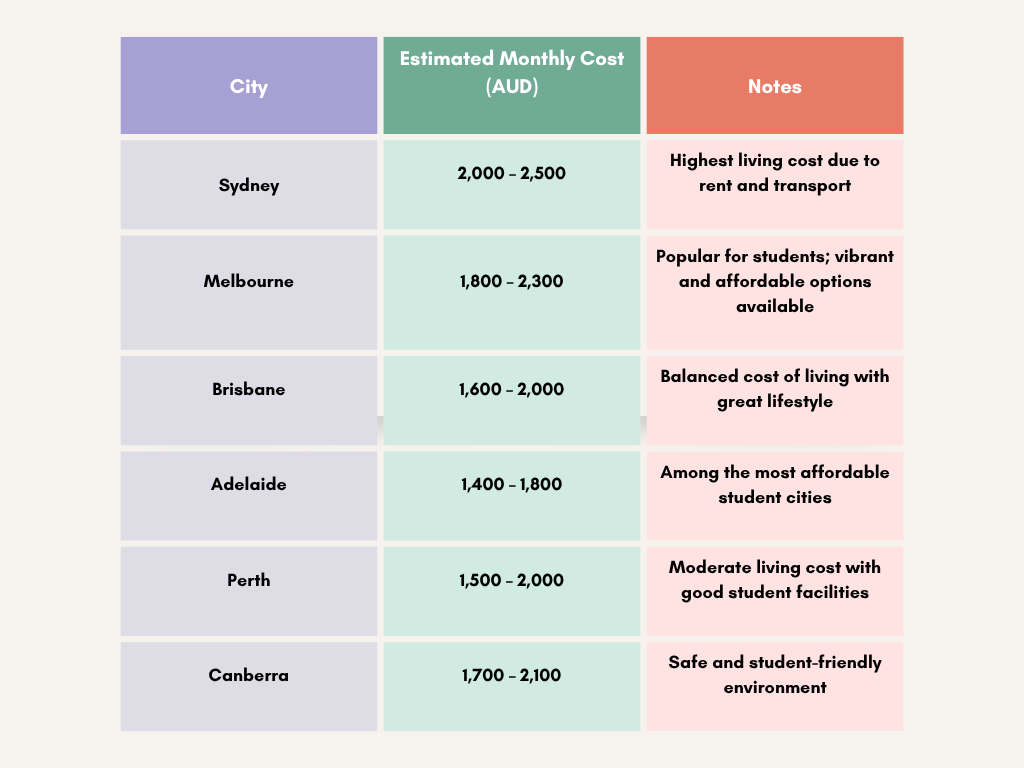
Many Scholarships in Australia only cover tuition fees, while others provide partial funding that includes living stipends (usually AUD 20,000–30,000 per year) or travel allowances. Always review what’s included before finalizing your budget.
Cost-Saving Tips for International Students:
- Choose Regional Campuses: Studying outside major cities can reduce living expenses by up to 25% and may even offer additional scholarship incentives.
- Work Part-Time: Under the Australian Student Visa (subclass 500), you can work up to 48 hours per fortnight during study periods, helping you manage day-to-day costs.
- Opt for Shared Accommodation: Rent-sharing with other students can save around AUD 400–600 monthly.
- Cook at Home: Preparing your own meals instead of eating out can lower food costs by nearly 50%.
- Use Student Discounts: Take advantage of discounts on transport, entertainment, and shopping using your student ID.
At Genius Study Abroad, we not only help you find the best Scholarships in Australia, but also guide you on budget management and part-time work options, so you can enjoy a stress-free and affordable study experience in 2026.
Contact No : 70 335 335 70
Read More : Top 5 Study Abroad Consultants in Delhi
Conclusion
Securing Scholarships in Australia is not just about academic excellence — it’s about strategy, timing, and preparation. Starting early, staying organized, and tailoring each application to reflect your unique goals can make all the difference.
Remember, every scholarship you apply for increases your chances of success, so don’t hesitate to apply broadly and confidently.
If you’re planning for the 2026 intake, now is the perfect time to start researching universities, preparing documents, and shortlisting scholarships that fit your profile.
Visit official scholarship portals, connect with university representatives, and stay informed about upcoming deadlines.
At Genius Study Abroad, we specialize in helping students like you identify the right opportunities, craft winning applications, and secure life-changing Scholarships in Australia.
With the right preparation, guidance, and determination, your dream of studying in Australia can become a reality — and 2026 can be the year that transforms your future.
FAQs
1. Can international students apply for Australian government scholarships?
Yes, international students are eligible for several government-funded Scholarships in Australia, such as the Australia Awards Scholarships and the Destination Australia Program.
These scholarships are designed to support talented students from developing countries, including India, and often cover tuition, living, and travel expenses.
2. What percentage or GPA is required for scholarships in Australia?
Most Scholarships in Australia require a minimum academic score of 70–85% or a GPA of 3.0–3.7 on a 4.0 scale.
However, competitive scholarships at top universities may demand higher grades or additional achievements in leadership and research.
3. Do I need an IELTS/TOEFL score to apply for a scholarship?
Yes. Almost all scholarships and universities in Australia require proof of English language proficiency through standardized tests such as IELTS, TOEFL, or PTE. Scoring above the university’s minimum requirement strengthens both your admission and scholarship chances.